Best Vacuum Sealers Guide
The Guide · Vacuum Sealers for Home Kitchens

A stronger pump won’t seal a bag of soup.

The countertop sealers we compared quote 75, 80 or 95 kPa of suction, and several chamber machines quote 100. That is a race toward a ceiling the atmosphere sets — air pressure at sea level is about 101 kPa — and no listing says how its figure was measured. The bigger issue is design. A countertop, or external, sealer pulls air out through the open end of the bag, so juice, marinade or broth travels toward the heat strip in the seconds before it seals, and a stronger pump only gets it there sooner. A chamber sealer lowers the pressure around the whole bag at once, so the liquid stays where it is. What actually separates a budget sealer from a serious one is where the vacuum happens, the length of the seal bar, the bags it needs and how many seals it can make in a row. We compared published specifications, maker claims and current Amazon prices for 39 countertop, chamber and handheld sealers listed in the US.

By Ilane Tall6 picks · 39 sealers comparedResearch-based — no testing lab, no invented scores

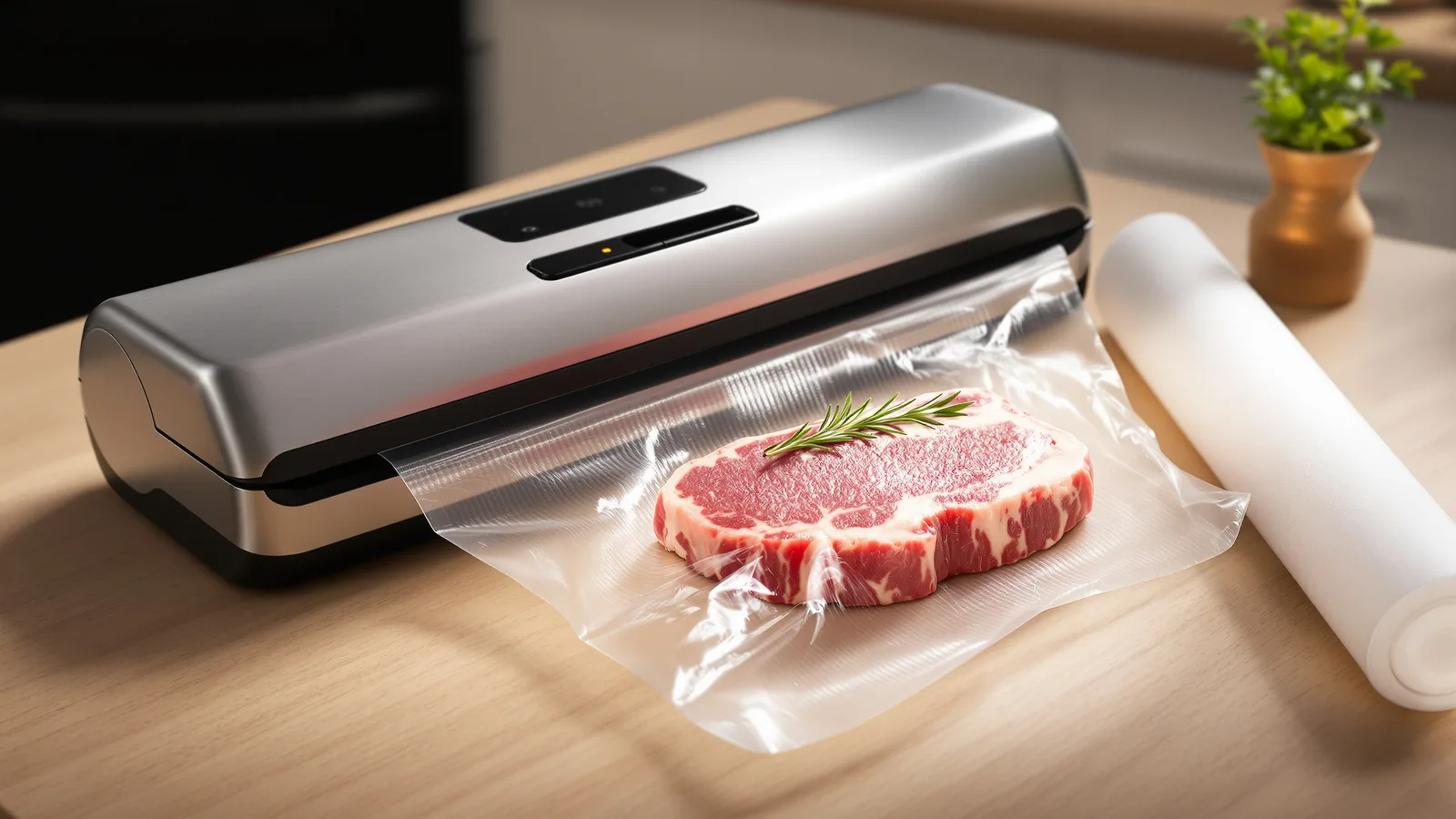
Stainless steel countertop vacuum sealer clamping a clear bag of vacuum-packed raw steak with rosemary, a roll of bag material beside it on a pale oak kitchen counter
The one to buy

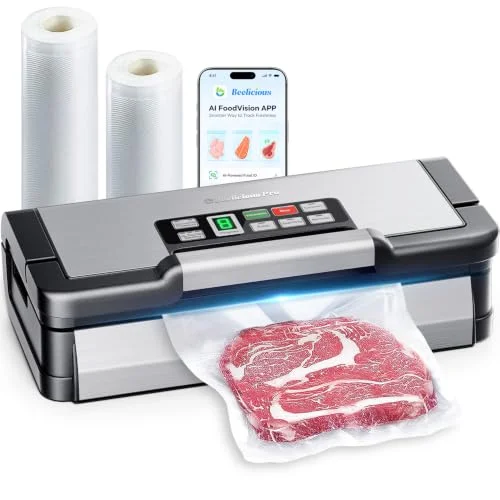
Beelicious Pro 95kPa Dual-Pump Sealer

Most kitchens need a countertop sealer that does four things well: pulls a hard vacuum on dry food, backs off for soft food, copes with meat juice, and makes bags to length. This Beelicious lists all four. A 130-watt copper motor drives two pumps, quoted at up to 95 kPa; Normal or Gentle pressure and a Pulse button let you stop before bread or berries flatten; a Moist mode and a removable drip tray deal with juice from raw meat; and built-in roll storage with a cutter makes every bag to length.

The details that make a sealer pleasant to use every week are there too. An easy-lock handle closes the lid with one hand, a countdown display shows how long the cycle has left, and the double heat seal — which Beelicious describes as 30 percent wider and four layers thick — lays two seams instead of one, useful insurance for bags headed into a long freeze or a sous vide bath. Two rolls and five bags come in the box.

The honest caveat: this is still an external sealer. Moist modes and drip trays manage liquid; they don’t defeat it, so soups, stocks and thin marinades belong in a chamber machine or the freezer first. The 95 kPa and five-to-twenty-second figures are the maker’s own, with no measurement method published, and the listing gives no dimensions or weight beyond calling the machine large.

Up to 95 kPa, dual pump·Double heat seal·Dry/Moist, Normal/Gentle·Roll storage & cutter
Beelicious Pro 95kPa dual-pump countertop vacuum sealer with easy-lock handle
Price
$119.99
Check price on Amazon →

Prices change. We refresh them, but Amazon is the authority.

Before you buy

Four things decide this purchase. The suction number is not one of them.

External, chamber or handheld

An external sealer clamps the open end of a bag and pulls the air out through it: compact and light, but anything wet and loose in the bag travels toward the seal. A chamber sealer puts the whole pouch inside a box and lowers the pressure around it; Gasbye’s chamber listing calls the result balanced pressure inside and outside the bag, which is why soup stays put. The costs are weight, counter space and price. Handhelds are a third path: cordless pumps that draw air through a valve on a zipper bag — FEPPO’s listing states plainly that its model does not heat-seal bag edges.

The seal bar sets the widest bag

The length of the heat strip is the widest bag the machine can close. MegaWise lists 11.8 inches on a compact external sealer; Avid Armor’s USVX chamber lists 10; VacMaster sizes its VP210 for bags up to 10 by 13 inches and its VP230 for 12 by 15. Then look at the seam itself. A double heat seal lays two parallel lines, which makers pitch for moist food and long freezer stays, and a few chamber machines — Vesta, Gasbye, Mesliese — make the bar removable or washable.

Bags are the running cost

An external sealer needs textured or embossed bags, whose pattern leaves channels for air to escape; one Beelicious listing spells it out — one smooth side, one textured. Chamber sealers run on smooth pouches, which cost less, as the CM255 listing from Online Packaging Solutions points out. Handheld pumps need their own valved bags. Built-in roll storage and a cutter let you make each bag to length, which is where most bag waste goes — FoodSaver pitches the cutter on its FM2100 on precisely that point.

How many seals in a row

Heat strips and small pumps need to cool, and a budget sealer that closes one bag of leftovers perfectly can falter on the fortieth bag of a processing day. Few listings address it: MegaWise says its updated model runs more than 50 cycles without overheating, Bonsenkitchen quotes 30 bags in 15 minutes, and VacMaster builds its chamber machines for prolonged, continuous operation. If you buy meat in bulk or process game, this matters more than any suction figure. If you seal a few bags a week, ignore it.

Side by side

The six, compared

SealerBest forTypeListed vacuumSeal barLiquidsPriceGet it
Beelicious Pro 95kPa Most kitchens External 95 kPa Double seal, length not listed Moist mode, drip tray $119.99 Get it
Avid Armor USVX Soups and marinades Chamber Not listed 10 in, dual wire Yes, by design $279.00 Get it
MegaWise 80kPa A first sealer External 80 kPa 11.8 in Moist mode, pulse $35.69 Get it
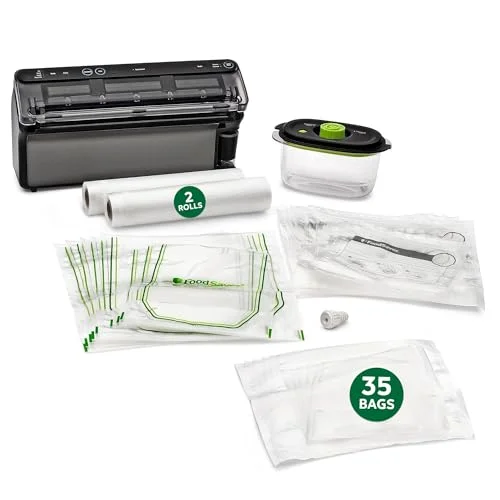
FoodSaver Elite Liquid+ Sauces without a chamber External Not listed Not listed Liquid mode, thick liquids $218.56 Get it
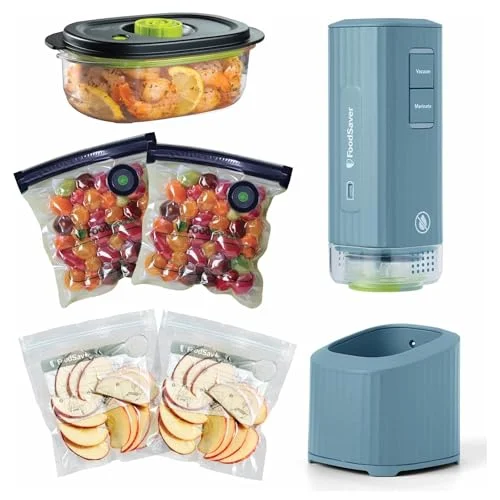
FoodSaver Mini Handheld Small portions Handheld, cordless Not listed Not listed Marinate Container only $39.99 Get it
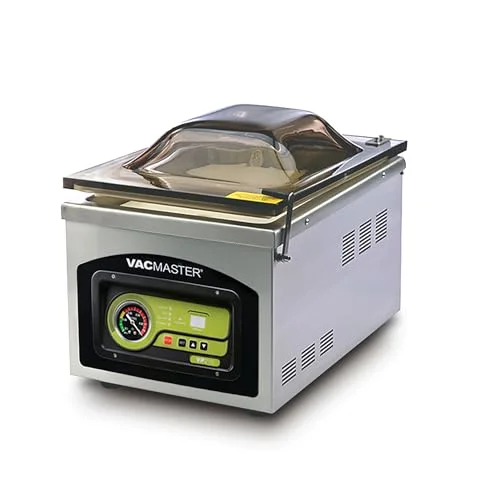
VacMaster VP210 Bulk meat and game Chamber Not listed 10.25 in Yes, by design $995.99 Get it
The six

Our picks, and who each one is for

01Best overall

Beelicious Pro 95kPa Dual-Pump Vacuum Sealer

Best for most kitchens

Up to 95 kPa·130 W dual pump·Double heat seal·Removable drip tray

The countertop sealer whose listing answers the most questions before you ask them. Two foam gaskets come pre-installed to hold the vacuum, and the mode list is unusually fine-grained: Dry or Moist for the food, Normal or Gentle for the pressure, Pulse for anything delicate, plus Marinate and Canister settings for the accessory hose. The maker quotes five to twenty seconds a bag. Roll storage and a cutter sit inside, the exterior is stainless steel, and the drip tray lifts out for cleaning. What it does not publish is a seal-bar length, dimensions or a weight; the listing only calls it large.

If you want one sealer for steaks, berries and bread that rarely makes you think about it, start here.

Beelicious Pro 95kPa dual-pump vacuum sealer in titanium grey
Price
$119.99
Check price →
02Best for liquids

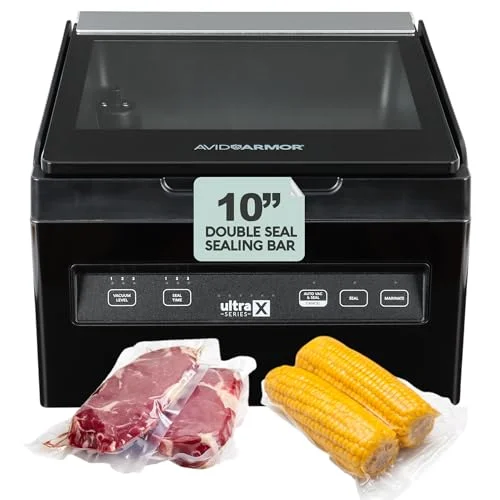
Avid Armor USVX Chamber Vacuum Sealer

Best for soups, marinades and anything wet

Chamber·10-inch dual-wire bar·3 vacuum levels, 3 seal settings·18.8 lb

The USVX is the entry point to chamber sealing on this page, and Avid Armor sells it on its low profile. The whole pouch sits inside under a full-view glass lid; the machine lowers the pressure around it all at once, so soups, stews, marinades and meat juices stay in the bag instead of racing for the seal. Avid Armor gives it three vacuum levels and three seal settings, from gentle on delicate produce to firm enough for heavy mylar bags, and a built-in pouch clamp holds the bag square. The trade-off is the bar: at 10 inches it is the shortest listed bar among the chamber sealers we compared, and the listing publishes no vacuum figure.

The first sealer here that treats a bag of chili as routine rather than a risk.

Avid Armor USVX compact chamber vacuum sealer with glass lid
Price
$279.00
Check price →
03Best budget

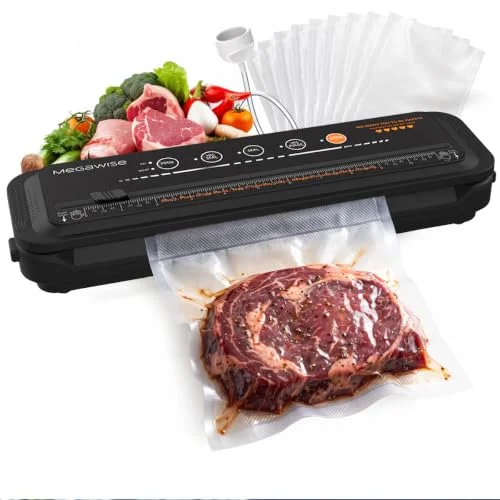
MegaWise 80kPa Compact Vacuum Sealer

Best for a first vacuum sealer

80 kPa·11.8-inch seal bar·Dry, Moist, Pulse, Seal·Jar hose included

This is about as little as a useful sealer costs, and it still publishes the numbers that matter. MegaWise quotes 80 kPa from a DC motor pump, ten to twenty seconds a bag, and an 11.8-inch sealing bar that takes most common bag widths. Dry and Moist modes cover the basics, Pulse lets you stop before marinated meat gives up its juice, and Seal-only closes a bag of chips. The maker says this updated version runs more than 50 cycles without overheating — a real figure where most budget listings give none. What the listing does not describe is a double seal, roll storage or a drip tray; bags and a cutter come in the box.

The sensible way to find out whether you will seal every week or twice a year.

MegaWise 80kPa compact vacuum sealer in black
Price
$35.69
Check price →
04Best all-in-one

FoodSaver Elite All-in-One Liquid+ Vacuum Sealer

Best for sauces and salsas without a chamber machine

6 sealing settings·Liquid mode·Sous Vide and Marinate modes·Bags included

FoodSaver’s answer to the external sealer’s oldest weakness is a dedicated Liquid mode, and the listing is unusually precise about its limits. It says the Elite seals soups, sauces and salsas, then adds a footnote: liquids with a viscosity of 1.39 mPa·s or higher. Water at room temperature sits at about 1 mPa·s, so thin, watery liquids fall below that line while thick sauces and salsas clear it. Around that you get six settings — Dry, Moist, Liquid, Sous Vide, Marinate and Pulse. The caveats: no suction figure, seal-bar length or dimensions are published, and it sits in a price tier close to the entry chamber machines.

The pick for sauces and salsas when a chamber machine won’t fit; freeze thin stock first.

FoodSaver Elite All-in-One Liquid+ vacuum sealer in dark grey
Price
$218.56
Check price →
05Best handheld

FoodSaver Mini Handheld Vacuum Sealer

Best for small portions, marinating and small kitchens

Cordless·Charging dock·Auto Marinate mode·7 listed uses

The FoodSaver Mini is a cordless handheld that lives on a charging dock, and the maker lists seven uses for it: marinating proteins and produce, infusing oils and liquids, sous vide, pantry, refrigerator and freezer storage, and sealing on the go. Its signature is a one-touch Auto Marinate Mode inside FoodSaver’s Marinate Container, which the maker says infuses flavor in minutes rather than hours. Read the fine print: liquids belong only in that container, and the listing says the Mini is not designed for liquids outside it. It also does not say which bags it pairs with, so confirm compatibility before you stock up.

A smart second tool, or a first one for a small household that seals a few portions a week.

FoodSaver Mini cordless handheld vacuum sealer in blue on its charging dock
Price
$39.99
Check price →
06Best for heavy use

VacMaster VP210 Chamber Vacuum Sealer

Best for bulk buying, game processing and long sessions

Chamber·Dry pump, no oil changes·10.25-inch seal bar·Bags up to 10 × 13 in

This is where a vacuum sealer becomes equipment. VacMaster builds the VP210 for prolonged, continuous operation, so a weekend portioning a side of beef or a season’s game is ordinary work for it. The pump is a dry, maintenance-free design with no oil to change; its bigger sibling, the VP230, uses an oil pump and a 12.25-inch bar. Controls are one-touch with a pressure indicator, and pressing Stop seals early and opens the chamber automatically. The honest catch: the bar is only a quarter-inch longer than the USVX’s, and the listing gives no weight, dimensions or vacuum figure.

Overkill for leftovers. For a freezer full of game every fall, the machine built to keep going.

VacMaster VP210 stainless steel chamber vacuum sealer
Price
$995.99
Check price →
Our method

How we picked — and what we can’t tell you

What we did

Specs, prices and maker claims

We compared published specifications and current Amazon prices for 39 vacuum-sealer listings — countertop, chamber and handheld, about three dozen distinct machines once bundles and color variants are folded together — then kept the sealers whose makers publish something checkable: a seal-bar length, a list of modes, a duty-cycle figure, a chamber size, a pump type. We treated kPa claims with caution, because no listing explains how its figure was measured and the numbers crowd against the ceiling of atmospheric pressure, and weighted sealer type, seal bar, liquid handling and bag requirements above everything else.

What we didn’t

We don’t run a testing lab

We do not physically test these sealers, we do not own them, and we do not publish invented scores out of ten. We also have no verified rating data for this category, so this site publishes no ratings of any kind — we would rather show nothing than make something up. The questions that matter most over the years — how a heat strip and its gaskets hold up after hundreds of seals, how a pump copes with a season of game — cannot be answered by anybody who has had a sealer for a fortnight. What we can do honestly is read every specification, compare them, and explain the physics behind them.

Go deeper

The guides behind the picks

FAQ

Common questions

Is a vacuum sealer worth it?

For most households that freeze meat or fish, yes. Air is what dries out and oxidizes frozen food — freezer burn is the visible result — and a bag with the air drawn out leaves far less of it against the surface, so you can buy in bulk, portion and freeze without gray, leathery edges. FoodSaver says meat can last up to three years frozen; other makers claim five, six or eight times longer than ordinary storage, with no common baseline, so read those multiples as marketing. If you rarely freeze anything, zipper bags will do.

Chamber or external vacuum sealer: which do I need?

External, unless you seal liquids often or in volume. An external sealer clamps the open end of a bag and pulls the air out through it; it is compact, light, sits in a far lower price tier, but anything wet and loose travels toward the seal. A chamber sealer lowers the pressure around the whole bag, so soups and marinades stay put, and it runs on smooth pouches. The trade-offs are weight — Avid Armor’s compact USVX is 18.8 pounds — counter space and price. Hunters, bulk buyers and committed sous vide cooks tend to end up with one.

Can you vacuum seal soup, sauces and marinades?

In a chamber sealer, yes — that is what the design is for. In an external sealer, freeze the liquid first: portion it into a container or a bag laid flat, freeze it solid, then vacuum seal the frozen block. Moist modes, Pulse buttons and drip trays help with juicy meat, but they manage liquid rather than keep it from the seal. FoodSaver’s Elite Liquid+ claims a Liquid mode for liquids at or above 1.39 mPa·s, which is thicker than water. Handhelds vary: FoodSaver’s Mini takes liquids only in its Marinate Container, while some others stop the pump when a sensor detects liquid.

Do vacuum sealers need special bags?

Yes, and which ones depends on the type. External sealers need textured or embossed bags: the pattern leaves channels for air to escape, and a fully smooth bag tends to seal with air still trapped inside. Chamber sealers take smooth pouches, which cost less per bag, and several also accept textured rolls. Handheld pumps use valved zipper bags or containers instead of a heat seal. Built-in roll storage and a cutter let you make each bag to length, which is where most of the waste in pre-cut bags goes.

What does the kPa number on a vacuum sealer mean?

It is the vacuum the maker claims the pump can pull, in kilopascals: how far below normal air pressure it can take the bag or chamber. Air pressure at sea level is about 101 kPa, so a 95 kPa claim leaves roughly 6 kPa, and 100 kPa is close to the physical ceiling. Listings that write −100 or −65 kPa mean the same thing. A higher figure should leave less air in the bag, but no listing we compared states how its figure was measured, and on an external sealer bag texture, a clean seal and the gasket matter as much.

Does vacuum sealing make food safe to keep longer?

It slows the spoilage that needs oxygen — oxidation, freezer burn, many molds — but it does not kill bacteria, and some dangerous ones, including the bacterium behind botulism, grow without oxygen. A vacuum-sealed bag of raw meat, fish or cooked food is still perishable: refrigerate or freeze it exactly as you would without the seal. USDA guidance is a refrigerator at 40°F or below and a freezer at 0°F. Vacuum sealing is not canning, and a sealed bag is not shelf-stable. This is general information, not food-safety advice for your situation.

Why won’t my vacuum sealer seal properly?

Most failed seals come down to the bag mouth. Moisture, grease or crumbs on the sealing area, a wrinkle across the strip, or food packed too close to the opening all leave a weak seam — MEGAWISE says to keep the opening clean, flat and dry, and Bonsenkitchen recommends a three-inch gap above the food. On an external sealer, a smooth bag will trap air. Worn or dirty foam gaskets let the vacuum leak, and sharp bones can puncture a bag after sealing. If seams weaken after many bags in a row, let the machine cool.